Smartphones have become widespread in less than a decade. In the form of applications, they facilitate communication by texting and phoning, provide entertainment, enable administration, and provide utilities to their customers.
With improved software development kits, programming languages, and excellent mobile phones, the global mobile application market is expanding.
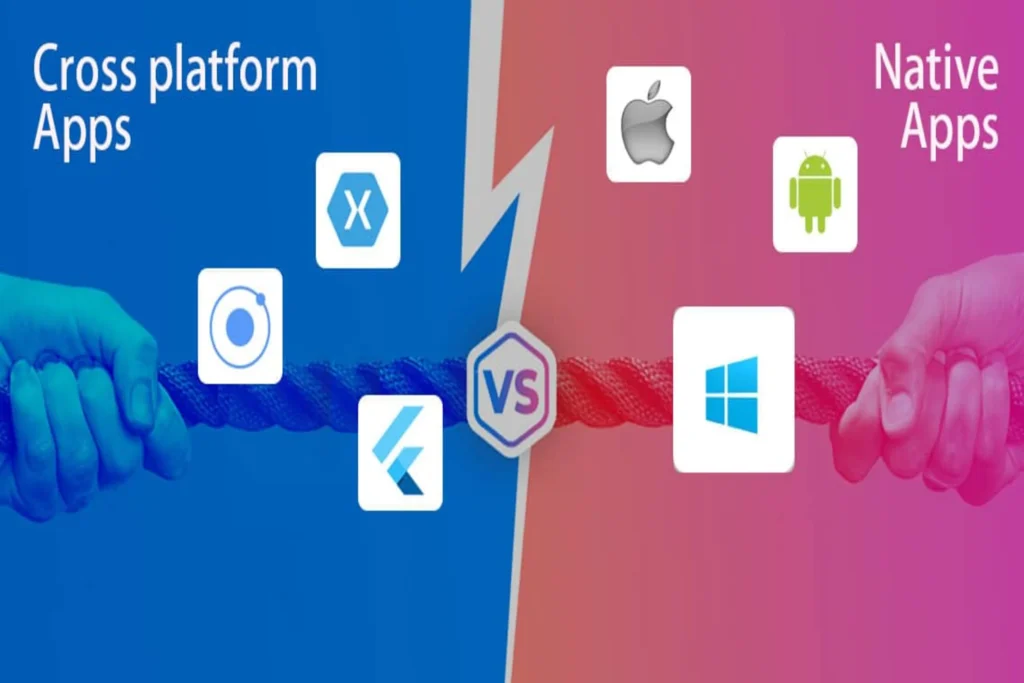
One of the most important considerations you must make when developing a mobile app is whether to employ native or cross-platform mobile development. In this post, we’ll look at both possibilities and consider which works the best.
An overview of native vs. a cross-platform app development
Let’s start with an overview of native and cross-platform apps.
Native applications:
Native mobile apps are built to work on either Android or iOS. Your apps are frequently written in a programming language specific to the operating system you are developing for. Android apps can be written in Kotlin, whereas iOS apps can be written in Objective-C or Swift.
Examples of well-known native mobile applications include Google Maps, Pinterest, Spotify, and WhatsApp.
Pros:
- Native features enable applications to provide better speed and user experience.
- Access to native APIs enables the integration of hardware sensors like Bluetooth, GPS, NFC, and so on.
- A specialized app store for distribution aids in increased awareness. Because of the native design language, visual upgrades are improved.
- Businesses can operate in areas with limited internet availability thanks to offline capability.
Cons:
- Due to the longer time needed for the separate coding of two apps, time-to-market increased.
- High maintenance expenditures because two apps must be maintained independently.
- Increased development expenses as a result of variances in settings, programming languages, and so on.
Cross-platform applications:
Cross-platform app development aims to target many operating systems with a single project. To design cross-platform mobile applications, you employ a single codebase. These apps are built with cross-platform frameworks that utilize platform-specific SDKs from a single API. This enables rapid access to the various platform SDKs and libraries.
Pros:
- Reduced time to market because the program just needs to be coded once.
- Lower app development costs because you don’t need distinct programs for each OS.
- Platform-independent source code offers greater flexibility and faster modifications.
- Because of shared source code, apps are simple to maintain and upgrade.
Cons:
-Performance difficulties as a result of a lack of hardware sensor integration support.
-The cascade effect occurs when a single problem disrupts service across many platforms.
-Inadequate user experience as a result of a lack of native UI upgrades
Which is better: native or cross-platform apps?
Let’s have a look at some factors to consider while deciding which development approach to adopt.
Time to market
This is a prevalent concern for new product lines and enterprises. To begin obtaining valuable customer input, the product must be shipped as soon as possible. Cross-platform mobile app development in this case since it is straightforward to design and iterate. Native mobile development would take longer to complete and eventually result in a long time to market.
Security
You must consider the company’s reputation as well as the consequences of losing users’ faith. Certain types of mobile applications might pose significant hazards. In these cases, native mobile development is the superior option. It includes various built-in security features, such as file encryption and intelligent fraud detection through the use of particular OS libraries. Native apps offer higher security, reliability, and scalability.
Performance
Native mobile development is frequently the greatest choice for apps like games app that require enhanced performance. You may ensure that your application operates as efficiently as possible by optimizing performance for a given operating system.
Costs of development
Some businesses have more funds for developing mobile apps than others. Cross-platform apps are ideal for low-budget projects because they require a small crew. Furthermore, cross-platform development allows you to save money by reusing code and projects.
Final words:
To develop a successful, stable, and well-received mobile application, you must first decide which operating system — or systems — your app will be compatible with. Whether your users are using Android or iOS, you must design your application with security, performance, and scalability in mind.